February 11, 2026
As organizations adopt generative AI, many are racing to define acceptable use. The instinct is familiar. New technology enters the workplace, risk teams react, and policies appear that aim to contain uncertainty.
The question worth asking is not whether AI needs governance. It does. The better question is what we can learn from the last 30years of workplace technology adoption.
Because this is not the first time teams have navigated this tension.
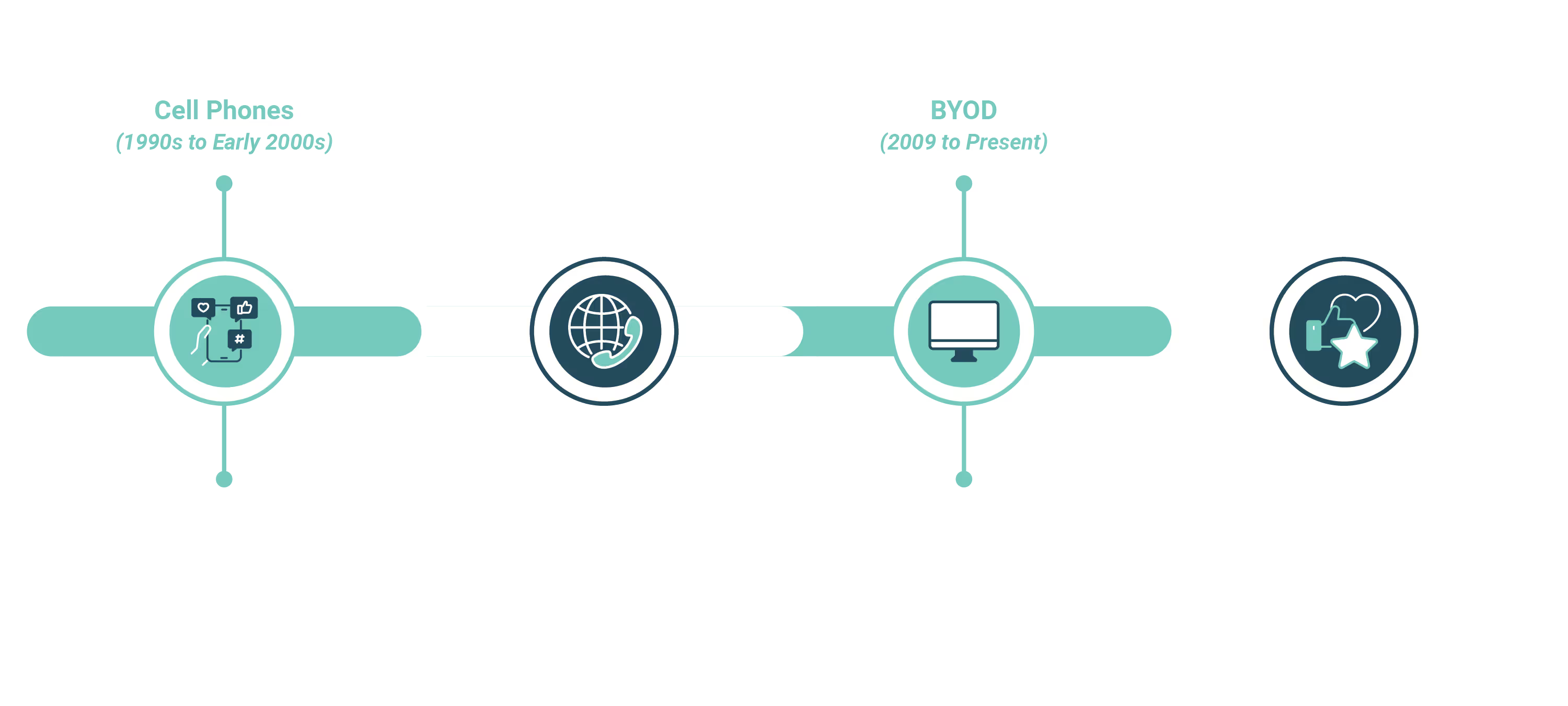
Cell phones in the 1990s. Internet and email shortly after. Bring-your-own-device programs in the 2010s. Social media policies that still require careful legal review. Each followed a similar arc: restrict first, address workarounds later, then evolve toward something more practical.
Security concerns were real in every case. The challenge was how organizations chose to address them. Those that focused on securing data and systems adapted more easily than those that tried to enforce behavior through policy. The long-term outcomes are well established.
Most AI use policies are still in the earliest phase of this cycle: restriction first, refinement later. Organizations are moving quickly to define acceptable tools, limit data exposure, and build training programs that are often still evolving.
Data protection is non-negotiable. Client confidentiality, regulatory compliance, and intellectual property safeguards must be enforced. The challenge is that many policies extend beyond protecting information into attempting to manage behavior. That is where friction begins.
Common pressure points look familiar:
These are not signs that governance is unnecessary. They are signs that governance must evolve toward clearer guardrails and practical integration.
If prior technology shifts are any guide, AI governance will follow a familiar progression. Early policies tighten or loosen inconsistently. Employees test boundaries. Over time, differences become visible.
Organizations that rely on rigid controls struggle to scale productivity and retain talent. Those that establish clear safeguards while enabling responsible use adapt more quickly.
Practical standards emerge around strict data protection, flexible personal use, and faster evaluation cycles.
Eventually, AI literacy becomes a baseline skill. The conversation shifts from whether employees should use AI to how they can use it effectively and safely.
The most effective AI governance separates what must be protected from how people actually work. Strong policies focus on securing data and systems, while leaving room for responsible use rather than forcing employees into workarounds.
In practice, that means keeping guardrails simple and actionable:
Governance works best when it enables safe adoption instead of attempting total control.

Across decades of workplace technology adoption, the pattern is consistent. Restriction leads to workarounds. Work arounds increase risk and friction. Integration follows once organizations recognize that controlling behavior is less effective than securing systems and enabling responsible use.
AI policies sit at the beginning of this cycle, not the end. Governance is necessary, but history suggests that it works best when it establishes clear boundaries without attempting total control.
Organizations that adapt fastest are not those with the most rigid rules, but those that combine strong safeguards with practical flexibility. In that model, employees are not something to manage around technology, but partners in using it safely and effectively.
Decades of precedent point to the same conclusion: AI is unlikely to be an exception.

.png)
Navigate what's next.