

February 2, 2026
Many teams rely on Azure to run critical workloads, but managing those environments day to day can stretch internal resources.Monitoring, patching, backups, and security oversight all require consistent attention. For some organizations, that work slows down innovation. For others, it introduces unnecessary risk.
Lunavi helps organizations manage Azure environments in away that fits their operational reality. To better support different levels of cloud complexity and internal capacity, Lunavi now offers a two-tier model for Azure cloud managed services. This approach gives teams a clearer way to align support with their technical needs and business priorities.
Basic Managed Services
Basic Managed Services are designed for organizations that want to offload essential Azure operations without expanding their internal team. This tier focuses on stability and consistency across core tasks such as monitoring, patching, backup management, and cost reporting.
Clients use this level of support to maintain day-to-day reliability while keeping their internal teams focused on application development, business initiatives, or strategic planning. The service includes 24x7 Azure monitoring and direct access to Lunavi’s US based support to help keep environments running as expected.
Premium Managed Services
Premium Managed Services support organizations with more complex Azure environments or higher operational requirements. In addition to everything included in Basic, this tier adds deeper architectural and operational involvement.
Premium clients often rely on Lunavi for advanced disaster recovery planning, architecture reviews, compliance and governance checks, and ongoing performance and cost optimization. This tier is commonly used by organizations running mission-critical workloads, supporting regulated industries, or actively evolving their Azure architecture.
One of the most common challenges organizations face when evaluating managed services is uncertainty. Teams are often unsure what level of support they need, what is included, or how services will scale as their environment changes.
The two-tier model is designed to remove that ambiguity. Each tier defines a clear scope of responsibility, making it easier to set expectations around coverage, escalation, and collaboration. As Azure environments grow or change, organizations can adjust their level of support without rethinking their entire operating model.
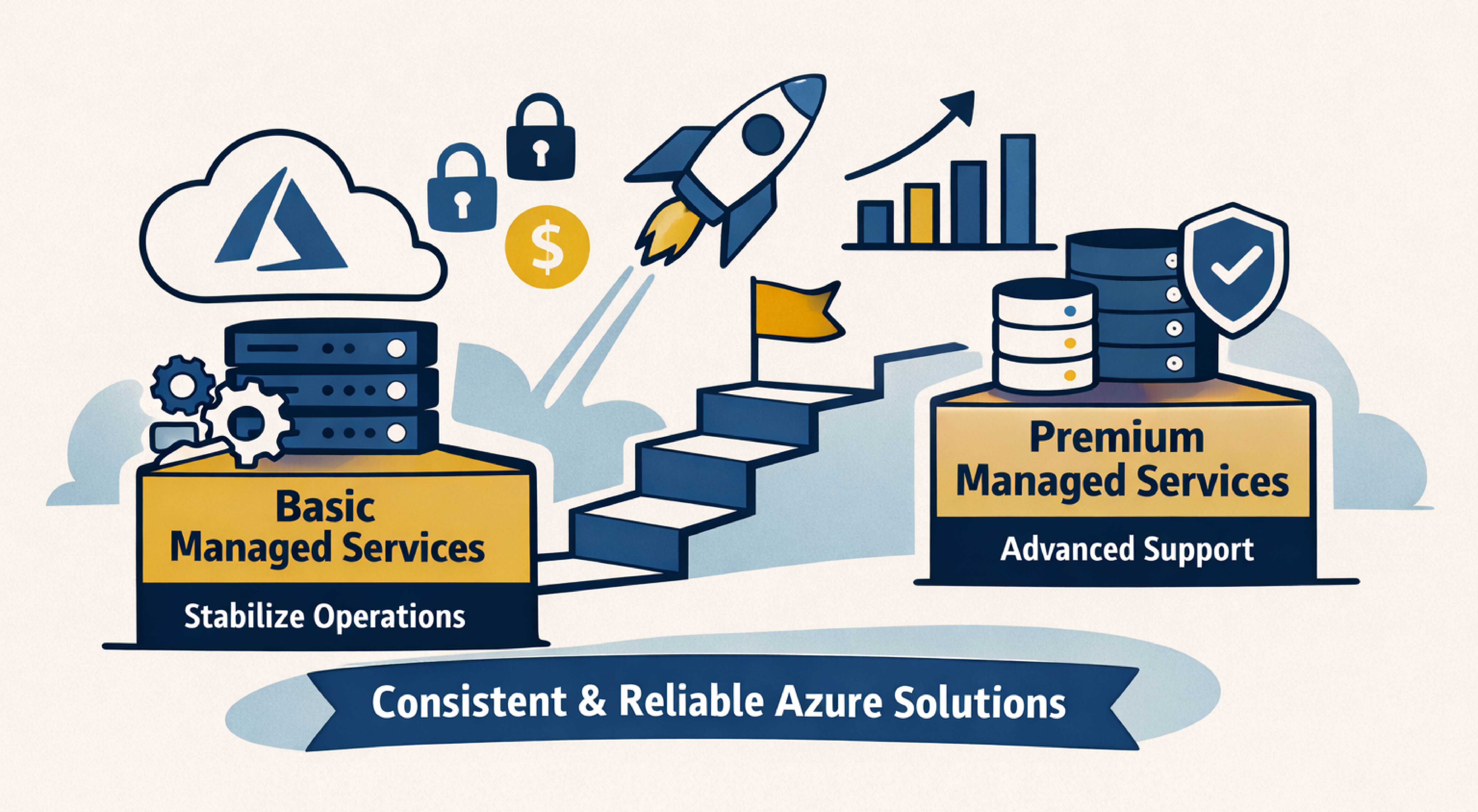
Azure environments rarely stay static. New workloads are added, security requirements change, and cost pressures increase over time. A tiered managed services approach gives organizations a way to match support to Azure governance while preserving flexibility for the future.
Some teams start with Basic Managed Services to stabilize operations. Others adopt Premium from the outset to support complex architectures or regulatory demands. In both cases, the goal is the same: consistent, reliable Azure operations that support business outcomes without unnecessary overhead.
You can get more information and figure out what works best for you right here: lunavi.com/managed-services/azure-managed-cloud.

.png)
We're here to help you tackle what's next in your digital journey.


